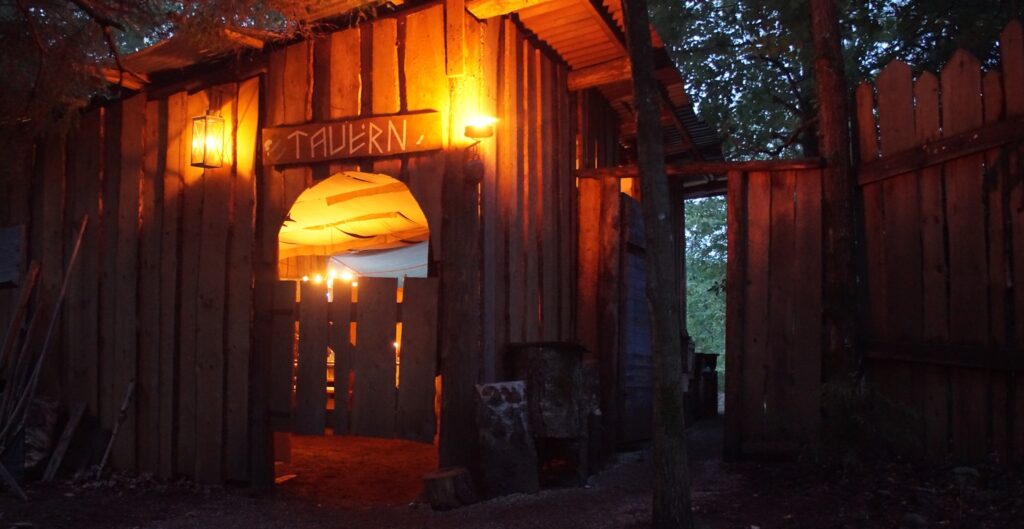
Building a fort for Orcs in the wild forest. Learn basic building skills. Do artwork. Some Larping photo shoots.
When
9-16 April 2023 Arrive on 9th Leave on 16th
Where
Sweden, westcoast, close to Uddevalla
Travel and accommodation
6 days + 2 days travel ALL paid for. Food, accommodation, activities and travel (up to a limit 275 euro). 17-30 years of age Participants only from: Sweden, Poland, Ukraine
– Use a hammer and a saw – Build a palisade and a tower – Work with natural materials such as wood and logs. – Do some artwork – Live simple – Cook and bake – Make a fire – Reflect and share your experience and feelings with others – Make friends – Enjoy wild nature
Schedule
Day 1)
Erasmus knowledge, GTKEO, fears and expectations, personal goals. Night walk. Fire night. Introduction to tools. Sharing #1
Day 2–5
Building a fort for Orcs in the wild forest. Carpentry Learn basic building skills. Also: – Do artwork. Paint tribal art on a gate. – Move some logs and stones. – Do artwork on a VAN – Some Larping photo shoots. – Fire and drumming in the Firedungeon – Hot tub / Sauna – Heat up the viking hall for meetings
Day 6)
Brunch and Sharing #3. Evaluation Celebrate: fire night. Sharing #4
You can stay extra days if you want
Warning
– Life is simple here. – Dry toilets (no normal toilets) – Vegetarian food – NO SMOKING HERE. – April is cold, we sleep with sleeping bags and blankets. – Limited showers – You must participate in the activities (but there are a variety to choose from).
Hastekasen farm Association (HFA) study visit in Ukraine, winter 2023
Sweden-Ukraine-Sweden 5200 kilometers. 18 days. 10 days in Ukraine. 14 places visited. Uzhhorod, Kolomyia, Chernivtsi, Vinnytsya, Kropyvnytskyi, Cherkasy, Bila Tserkva, Rivne. Also: Tepla Gora, Kosiv, Charivne, Zeleni Kruchi, Emilianivka. Sebastian and Jakob (HFA members) in the car.
BACKGROUND
I personally got very upset when russia invaded Ukraine a third time. I don´t really know why. Maybe because I felt it was a real breach of 70 years of peace in Europe (apart from civil war in Jugoslavia). Maybe because it is fairly close to my country. Maybe because I know some Ukrainians. Or just the sheer cynical act of killing so many people just for what… building an empire… geopolitical reasons. HFA owns a van financed by Erasmus (EU). We are suppose to do youth work with it, and spread the idea of Erasmus. I am also interested in eco-communities and have heard about a few in Ukraine. Why not do three things at the same time: bring down some aid, and visit some projects. The third reason is about me being bored and in need of a adventurous vacation. I am also interested in politics and wanted to check out what kind of country Ukraine is, that wants to join EU and even Nato.
THE WAR
We passed many road blocks, there was a night curfew and “bomb sirens” in some of the cities visited… may sound dramatic for those that are not at war. But compared to the war on the frontline… these were small issues. Roadblocks and curfew just made us feel safer. It has a limiting affect on possible crime, I suspect. One estimates that 7000 civilians have died so far in the war (maybe not counting Maripol), the amount of civilians killed by rockets in the west and middle of Ukraine and outside of Kyiv was when this was written about 200. That is 200 during nearly a year in a huge country in an area of maybe 20 million people. My estimation is that road traffic and covid are more deadly that rockets in the areas we were travelling.
ABOUT UKRAINE
What I realized. Ukraine is huge. Lots of people live in Ukraine. It is a country with modern cities and very simple villages. Not as poor as expected. While media was reporting on war, suffering and victims… I was travelling in a modern country where there was lots of (for us, cheap) fuel, ATM´s working, hotels and restaurants, credit cards accepted. Roads between big cities was good, but much worse on the country side. Yes there were many dark cities and electricity cuts came and went. But since I am a person that has lived off-grid and partly was brought up in a country with regular power cuts – I don´t take electricity for granted. And the association HFA does train youth to be more independent from modern luxuries. I am aware of that behind the scenes Ukraine’s economy is in collapse, unemployment and inflation. And some millions of internally displaced people. What keeps this country going is support from the west and hard working Ukrainians.
THE TRIP
We got organizational support from GEN-Ukraine (Olha Simon) and Youth centers Ukraine (Dmytro)
The journey first went via the ferry to Poland and down to Krakow where the association has partners. Further to Slovakia which I wanted to see as I had never been there, and closer to the Carpathian Mountains which I also wanted to see. A trip like this naturally depends on a working car. This was a Renault Master Van that had only done 5000 km, but had many problems before. I filled the car with “car equipment” and equipment for very cold weather. In addition, all gifts to Ukraine. The border control was as expected frustrating – more or less non-existent English by the staff – even on the Slovakian side which is an external EU border! We were treated as “goods”. They wanted a list of everything and a receiver and would like stamps on everything. Took time. Now we know what is required.
In the city of Uzhorod, at the community center in an old Soviet movie theater, we were greeted by teenagers singing in our honor. Then pizza and conversation via an interpreter. Young people spoke more English than the older people. In the evening we went out into the forest to a hermit who lived in an imaginative mud house he built himself (our association deals with similar things). Next day on to the mountains. Climate change is increasingly playing tricks with the weather and the journey began with mild weather and sprouting grass (January) over the Carpathian Mountains. We visited another youth center in Kolomyia and had dinner with two volunteers and stayed overnight with one of them. The next day up in the beautiful mountains where we spent the night in an “eco-village” (Tepla Gora) where we met the first internally displaced persons. Good conversations by the fire and overnight stay. We left some stuff here. We had coffee with a young guy who was an NGO volunteer in various eco-village initiatives. Heard our first “air alarm”. “When in Rome do as the Romans do” – which meant: we did nothing. On to visits to youth centers in Chernivtsi, Vinnytsya, Kropyvnytskyi and Cherkasy on the Dnipro river (Sorry for all misspelled city names). We were very well looked after by “the locals”. And got full descriptions of their activities. One night we had dinner at a simple guesthouse and drank a glass of wine and rented a room. Cost SEK 35 euro in total, lovely country to tourist in for westerners.
THE AID SITUATION
We had misunderstood a lot about the situation in Ukraine. The situation can change fast in Ukraine. And the media picture is not always accurate (much focus on war and suffering). On the contrary we found western and middle Ukraine very functioning. A modern country. Until now, no one really needed the winter clothes we mostly carried with us. We had asked private individuals in Sweden to give us warm clothes and other things (see list of donors at the end). It’s not that the Ukrainians don’t have winter clothes – they had winter even before the war. What Ukraine needs may shift. HFA could not afford to buy electricity generators or material that frontline soldiers need. We and some donors had bought things for total of 1000 euros and on top of that second hand things. Most of it was left in places where internal refugees could get access to it. Our 2500 candles was very appreciated, also flashlights and power banks and sanitation items. We soon learned that the meetings themselves were a form of “aid”. People in Ukraine became grateful that we in the West care and that they can talk to us “face to face” and reflect, talk and exchange ideas. To be seen and not forgotten.
THE TRIP #2
The electricity went out from time to time in the cities we visited. We heard “air alarms” three times, but no missiles came to the regions we were in. We turned off from the main roads and drove through simple dark villages. Houses in a row along kilometer-long village streets. High fences and closed gates. Most houses old and worn, and mostly made out of mud, logs and some bricks. Cement tile roof. We left some of our stuff in a village school. On to two eco-villages. Cherivne and Zeleni Kruchi. Well received with beds and home-grown food on the table. Pickled vegetables from the underground cellar and home-baked bread. Good conversations. Came across some internal-refugees in one of the “villages”. Left more stuff here. There are many different cultures in Ukraine. City dwellers are clearly different from country dwellers. Ecovillagers often have little in common with ordinary villagers who sometimes(not always) live in social misery (did someone say “vodka”?). There is also some tension between the Ukrainian and the Russian culture in the country. Being a native Russian was rarely a problem before Russia invaded the first two times – but lately Russian has become a problem (see below).
THE ENEMY
Since I have been studying this war for more than 500 hours and visited Ukraine during war – I have an opinion about this war. I do not like when some media portray it as “Putins war”. This is not putin’s war. This is not russia’s army which is the main opponent. This is the russian people’s war. The war against Ukraine has broad popular support in russia (moscow). If putin disappears, the second most popular leader is Prigozhin, the leader of the ruthless war criminal-terrorist force.
It is difficult to get even the russians who fled the mobilization to distance themselves from the war. The average Russian believes that Russia has the right to dominate its neighboring states. Russia and its people are an empire that takes land with the help of weapons (Afghanistan, Georgia, Chechnya e t c). russia is an active colonizer – displacing 100,000s of people as a method (Under Stalin, under putin – same method). Russians settlers are moved into occupied territories.
Russia attacks with language. Therefore, many Ukrainians have stopped speaking russian and even if their mother tongue is russian, they practice Ukrainian. Libraries clear out Russian books. Moscow takes the presence of russian speakers as a pretext to invade and “protect” a minority. (Just as Germany annexed Sudet, Austria and other German speaking territories.) russia invades with russkiy mir – a russian world of peace and russian culture that comes when they subjugated a neighboring state and made them a vassal state with second class citizens. That is why the Baltic countries quickly joined NATO, they know russia well. (That is why it is a problem that there are many russian speakers in for instance Lithuania). Sidenote: I once wanted to work with an association in Lithuania that was led by russian speakers. I wanted to know their stance on the war. They could not denounce the invasion – they said the situation was “complicated”. I cancelled our cooperation.
The russian population are experts at feeling like victims, but being perpetrators. They think they are defending themselves against NATO attacking them. They do not consider Ukraine to be its own state that has the right to choose its own path. After Russia broke the Minsk agreement, in my opinion there is no point in sticking to it anymore. There are indications that 3 out of 4 russians are now against the war. I am convinced that these russians are against LOOSING the war, or against THEMSELVES taking part in the war. They still would not mind a russian victory.
Yes I acknowledge that this is a proxy war where USA enjoys seeing their age old rival suffer – but it is mostly a war where Ukrainians are fighting for their freedom. Just as Finland fought of the russians some 75 years ago and thus became a prosperous free country within EU.
It will take generations of Ukrainians to forget all the war crimes: the terror against hospitals and electrical installations. The executions of tied up prisoners, the torture, the rapes. The stolen children. And even if 100 years has passed, things like the Holodomor is not forgotten.
The worst that could happen to the Kremlin is that Ukraine develops like its Slavic neighbor Poland (which is booming). Belarussians will take note of that, and in time the Moscow residents will too.
An imperialist russia will always be a threat to its neighboring countries – and Sweden is also a neighboring country that russia has made explicit threats against. As a person driving aid to Ukraine, russia has put a price on my head (I have heard they pay 20.000 dollars for dead or captured aid workers). And if Sweden send Archer (the World’s best artillery system) we are basically at war with russia (according to me). And it will be a long war. And the strongest economy wins (russia is a tiny economy compared to the EU). As long as the EU’s population endures longer than the russians. Unfortunately russians are tougher then western people – they can suffer longer.
russia must learn that it does not pay off to attack in the westward direction. I would prefer that russia is beaten down down to its knees and the russia federation is broken up so the colonized 30+ languages/cultures of the eastern russian federation get autonomy. Hopefully, after the war, the EU can prevent a revanchist Russia. A European democratic Russia would be a good alliance partner for the EU in a future geopolitical landscape. The US will not be around forever. There is every reason to hand out a “carrot” to the people of Russia – “if you seriously “normalize” your country and respect your neighbors, we will cooperate with you”. But as for now I think they are too proud. They think they should be an empire – above the rest of us. Nationalism in its most ugly face.
Until then… russia is paria to me…. and will be until I die most likely.
CRIMEA
… maybe the core of the conflict. Russia could have been sufficed with Crimea if it was not for the fact that Crimea needs the Kherson oblast – it can not function without it. Khrushchev knew this when he transferred Crimea to Ukrainian administration. Crimea itself is neither Ukrainian or russian – it is a multicultural place… or was… before the russians started displacing people. Deep down, West don´t really care who Crimea is controlled by (west did nothing much 2014). Of course it would be in the wests interest if Ukraine owned it, but it is a fact that Crimea is the one oblast where there were most opposition to Ukrainian rule. Many referendums have been held, the one I trust the most was the one being done 1991 before different parties started to meddle in Crimea. About half the Crimean population was positive to Ukrainian rule. That may not mean that the other 50% wants to be ruled by Russia, I guess many of those votes wished for independence from all other countries. But if Crimea remains russian it means that the west has accepted that borders can be changed by invasion. Europe’s borders have been frozen for 70 years – 70 years of peace (apart from Yugoslavia falling apart) – russian invasion ended that.
THE TRIP #3
I had planned not to go to Lviv or Kyiv because “everyone” goes there and because they are popular missile targets (Jakob is young and has many years left to live). However, I forgot to mention that we were supposed to stay away from Kyiv and the navigator took us on a route to the outskirts of the capital and past Irpin and we saw burnt out houses and collapsed bridges. We left quickly and drove out into the country and the last eco-village – an Anastasia village (google it if you are interested) good dinner, playing children, interesting houses and good conversation. After that, there was only Rivne left, visiting a youth center and a coffee with a former volunteer from our farm (who will now move out into the country with her husband and live country life).
All the youth centers we visited was run by women. Good social and organizational skills. I missed the male perspective on many issues. I have written to EU-Erasmus with a request that they contact “Kyiv” and ask if they can relax their policy on men not allowed leaving the country. I would like the Erasmus/ESC Brussel office to approach a suitable department in Ukraine and ask them to let out Ukrainian men to take part in Erasmus/ESC projects in Europe/EU. Erasmus is part of a future possible EU membership of Ukraine and can be used to slowly link/merge our cultures. This is a process that should start imminently. And the men are needed. Not all 20 million (?) Ukrainian men are suitable for the military, but many could be a positive force developing the civil society. Just as Ukrainian soldiers are trained abroad, so can Erasmus participants be trained abroad.
READY FOR EU?
Didn’t see much corruption during the trip, but hear a lot about it. It is extremely sad when I hear about donations disappearing. Rumors of 50 new cars not being used for what was planned (Med-evac)(some instead ending up for private use by politicians). Or truckloads of material disappearing (likely being sold and money in private pockets). Or how people working for the state (for instance the national bank) enriching themselves. All this will slow down Ukraine’s integration with EU. And I for one would never give support to the Ukrainian state, I would prefer to see the things directly given to the people that is going to use the stuff.
So are Ukraine ready for EU? Off course not. There are remnants of “sovietism” that still has to be “cleaned out”. Ukraine has had problems with corruption on all levels. And war usually does make probability of corruption increases. There are still people in the power structure that walks away with unexplainable sums of money. Has there been a brain drain of Ukraine due to Ukrainians leaving to work in the west. Has the liberals left? How will it be to incorporate some 40+ million conservative Ukrainians into EU. How will that shift the power balance within EU? According to my observations – Ukraine has a lot to offer EU. Not just a new bigger market, not just the nature resources of the country. Not just its geopolitical importance and buffer to imperialistic russia. But the toughness of the people. they are hardworking in general and ambitious. Steps have been taken to modernize its administration, taxes in many cases stay locally, and thus power is decentralized. I really hope that all the aid Ukraine receives are connected to clear expectations for the future, in a way that “Kyiv” is held accountable.
THE WEST – EAST DILEMMA
Not all in Ukraine think EU and Nato is the way forward. There are many who feel comfortable with the Russian language and culture. Many that feels that the west is weak and decadent. Many that adhere to family values and/or are religious. Many that distrust capitalism and globalism. I for one think that this should be respected. A democracy can always be judged by how it treats its minorities. One should not swallow liberalism without criticism. And EU is not doing that – there is a tension between conservatism and liberalism. And in a democracy such tensions should exist. The situation in Ukraine, as with any country in a war for survival, is that there are no total free speech. One can simply not stand up and say one is pro-russia, maybe not even say one would like Ukraine to be neutral and stay out of EU and Nato (a solution that once may have been viable, but due to the actions of russia, no longer are). I hope Ukraine can keep its nationalism checked.
I can understand the minority of russian speaking people in (the eastern) Ukraine can feel threatened by Ukrainian nationalism. But I am sure even they would prosper under a liberal EU oriented state. Look at slavic former soviet Poland… Ukraine could prosper like they are doing. But I guess etnic russians have been fed for generations the ideas of Russkiy Mir, failing to understand that they would just be second class citizens under Moscow. The way Moscow treats its citizens and its soldiers should be enough to choose sides.
One can say being a patriot is compulsory during a war – but where does the line go between being patriotic and a nationalist. It is my impression that it is “the people” that fights this war, not the state. It was the people (citizens that took personal initiative) that saved Kyiv those first crucial days. And if the state had done its job, the russians would not have walked into the Kherson oblast that easy.
I have understood that Zelenski is unanimously respected by “all” in Ukraine for one thing – the way he “markets” the war towards the west and brings in aid. And with “him” I mean Zelensky and whoever are behind or beside him. Many are critical to his economic policies and even how the war is conducted. Making Ukraine a prison for all men is another thing to debate.
It is no doubt in my mind that the real test of Ukraine democracy will start the same day the war ends. Lets say all hell will break lose on the political scene, that is my belief. I hope they will prevail.
Donors
EU – Erasmus FRAMSIKTEN Lysekil kommun. Bergsgården Bil & Släpvagnscenter Allsports Henån Gym Hästekasen Gård Ulla och Agne Olausson Ulf Vinjehag Gratisbutiken Waldorfskolan G. Niklasson Eva Karlsson Niklassons Gummi & Mek. Verkstad AB Jakob Synott Jacob Johansson and the Vikings Anders Robert Larsson Johan Leek Maria Leek Kristian Bäcklund Joseph Barsi Sebastian Näslund Gimle Lajv Marie Murgat Marcus Göthberg Josef & Nadja Larsson Anna Jörnås Emil Sergel Anneli T. Johansson Anne-Lie Holm Karlsson Harumi Larsson Marie Kristensson Petra Andersson Ulrika Olausson Anders Olausson Erik & Johan Olausson
You are welcome to come in “costume”: tribal, viking, shaman, fairy…?
Music sessions take place in the forest. Bring an instrument for the amateur jam session. When darkness fall we do a Tribal rave. Fires and torches. Bring blanket/sleeping bag (or rent from us).
15.00 hang in the garden, buy lunch, take part in yoga. 17.00 Tour of the farm 18.00 Food in the garden. 21.00 Music 22.00 Snacks & bar 23.00 AmateurShamanJam 24.00 Tribal techno fire dance in the forest 01.00 Howling at the moon from the tower 02.00 snacks in the viking tavern and more music
No drugs, only alcohol, nikotin=be discreet. 18 years or older.
We have 7 outhouse toilets and military tents for a 100 people.
I am the one. I am the one that can walk alone I am the one that finds my way I am the one that face my fear I am the one that walks through darkness. I am the one that finds the light. I am the one that makes the fire I am the one that builds the shelter I am the one that finds the food I am the one that survives. I am the one that grows stronger every day.
When
Done
6 days + 2 days travel ALL paid for. Food, accommodation (tent), activities and travel (up to a limit). Up to 30 years of age, English speakers Participants only from: Sweden, Poland, Ukraine
– Live simple – Cook and bake in nature – Keep sheltered and warm in the forest – Orientate with a map – Make a fire – Make a camp – Hide and sneak – Recognize food in nature – First aid – Drumming and chanting – Live without your phone – Reflect and share your experience and feelings with others – Make friends – Enjoy wild nature – Some organizational skills
Schedule (preliminary)
Day 1)
Erasmus knowledge, GTKEO, fears and expectations, personal goals. Airsoft? Night walk. Firenight. Handicraft. Sharing #1
Day 2)
Map and compass theory. Walk to sea, incl compass, incl: Weather and camp places. Wellbeing and health, walk, carry. (3 split groups) Leave mobile. -> Group test nature camp (3 groups)
Day 3)
Evaluation and brunch Walk+ workshops: Map and compass. Weather and camp places. Wellbeing and health, walk, carry. Care for nature (incl laws). (3 split groups) Firenight. Sharing #2, Get mobile back.
Day 4)
(3 split groups) Workshops. – Fire and wood (hot stones) + bake. – Knots and tarps: – First aid (Leave mobile) – Personal exam start (18 hours alone in nature)
Day 5)
Brunch and Sharing #3 Evaluation Get mobile. Documentation Go to sea Celebrate: fire night. Sharing #4
NO COURSES CURRENTLY PLANNED – IT IS TOO EXPENSIVE. Expression of interest for course at the Deepspot 45 meter dive tank https://forms.gle/bAuQVZya2yMsJRyXA Those of you who have been with FSE to Deepspot before – just send an email
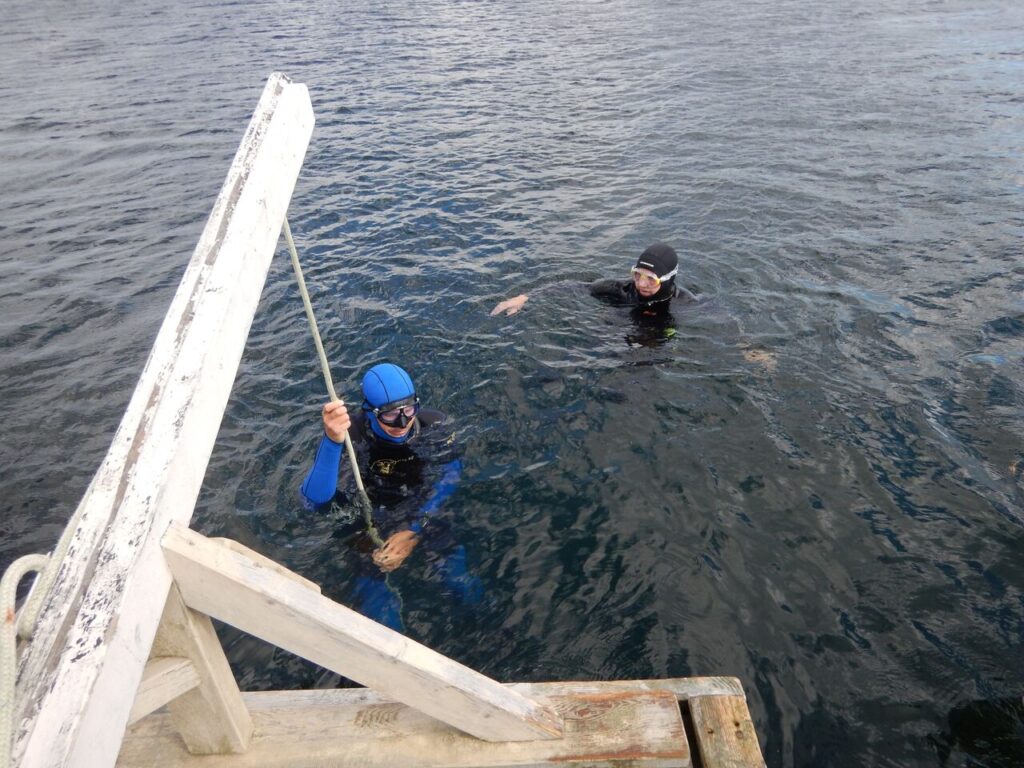
The best conditions of my life for deep freediving turned out to be indoors in a dive tank in Poland. 45 meters deep, 32 degrees, 45 meter visibility. Lines and every imaginable piece of equipment. More expensive…. but an experience of enjoyment and joy. And not least the best conditions for going deep.
FSE with me Sebastian will now organize a fourth course in this dive tank. It is located in Warsaw (Poland).
Day 1 Travel + Dive Session #1 20.30 Day 2 Dive Session #2 14.30 (Friday 10.30) and #3 20.30 Day 3 Dive Session #4 14.30 (Saturday 08.30) (+ travel)
Dry sessions, theory and 4×90 minutes in the water. Exercises and instruction. Max dives and certification. Some online preparation. Certification level 2-5. Individually adapted exercises. Focus on deep diving.
Only for those who can equalize pressure down to 5 meters!
*COSTS
First time with FSE or FSE level 1 certificate: 5000 SEK
If you have an FSE level 2 certificate: 4500 SEK
If you have FSE level 2 and have been with FSE at Deepspot: 4000 SEK
If you have FSE level 3/4 from Deepspot: 3500 SEK
Additional costs: Travel, Food and accommodation.
ACCOMODATION
We can probably arrange accommodation for around 350 SEK per person per night in double rooms at Hotel Panorama (15 minutes walking distance) (We are negotiating the price). Possibly we can arrange accommodation in Deepspot’s cool underwater room for 1000 SEK per room/day (space for 2).
FOOD
(Bring your own snacks+) the restaurant at Deepspot (100-150 SEK per meal). A grocery store is located 15 minutes away. Drink a lot all the time (the pool is warm).
TRAVEL
There are many direct flights to Warsaw (Chopin airport or the more distant Modlin airport) from both Gothenburg/Stockholm (Ryan air/ Wizz air). An alternative is to be several people in one car and take the ferry from Ystad and then drive 650 km. (possible to drive via the Sassnitz ferry which is faster but then Germany must be crossed).
FSE has an assistant on site during the course who has “local knowledge” and supports the whole group regarding travel, accommodation, food and many other possible things.
FREEDIVING
Bring swim trunks – that’s all. Preferably a dive watch if you have one. EVERYTHING else is available here. You are not allowed to bring your own equipment into the pool. You are not allowed to wear a wetsuit. Rashguard is fine (possibly neoprene vest). It is 32 degrees in the pool. Visibility, temperature, equipment and lines provide maximum conditions.
Do not worry about what is written on Deepspot’s website about courses. This is an FSE course.
TA MED
Swim trunks, different variants.
Swimsuit (no bikini).
Mask if you have “special needs”
Dive watch, if you have one.
The blue European health insurance card
Possibly certification card (Not if you have FSE)
Snacks
Clothes for stretching.
Warm hat.
Rashguard or neoprene vest allowed.
COURSE
Dry sessions, theory and 4×90 minutes in the water. Exercises and instruction. Max dives and certification. Some online preparation. Variable weight diving. Be pulled down. Total focus on reaching depth. And also being able to be active at depth. For example in level 3 it includes swimming down to 18 meters, swimming 20 meters along the bottom and 18 meters up. All dives over 20 meters = lifeline. ALWAYS buddy system.
If you/I find a replacement you only lose 500 SEK If you cancel and no one takes your place then you get back all costs that I can recover… however maximum 3000 SEK refunded. Possibly vouchers for Deepspot if they do not refund. If FSE cancels you get 100% back. Possibly vouchers for the Deepspot part, if they do not refund.
OTHER
Do not sign up if you cannot equalize pressure. You will not be allowed to dive above your current certification level, i.e. prove that you are a safe level 2 diver (16 meters) before going towards 20 meters. That you are a safe level 3 diver (24 meters) before going towards 30 meters. The caves are not open to freedivers. LMC BO and you can be banned. Right next door there is a spectacular water park. https://parkofpoland.com/en/
In 2003 Sebastian Näslund held his first freediving course. Since then he has trained close to 1000 students. In parallel over the years he has set several Swedish records and participated in many World Championships. He considers as his greatest merit that he has swum down to 70 meters depth using only breaststroke as technique. This would not have been possible without his interest in research in extreme physiology, sports psychology and his practice of yoga. Sebastian is instructor on 5 courses during summer 2022. The courses are held from the farm Hästekasen, located 800 meters from the sea on the west coast. The courses offer: food, lodging and equipment (if needed). Just as much as you will learn to hold your breath and swim deep – you will learn a lot about your body and your mind.
Our courses maintain a high international standard and can lead to certificates.
EQUALIZATION
You must be able to equalize before you come here. Test on land. Hold your nose, blow against your nose and feel your ears click (the eardrums are pushed outward). Preferably test under supervision in a 4 meter deep pool. You should be able to reach the bottom without feeling pain or pressure against the ears.
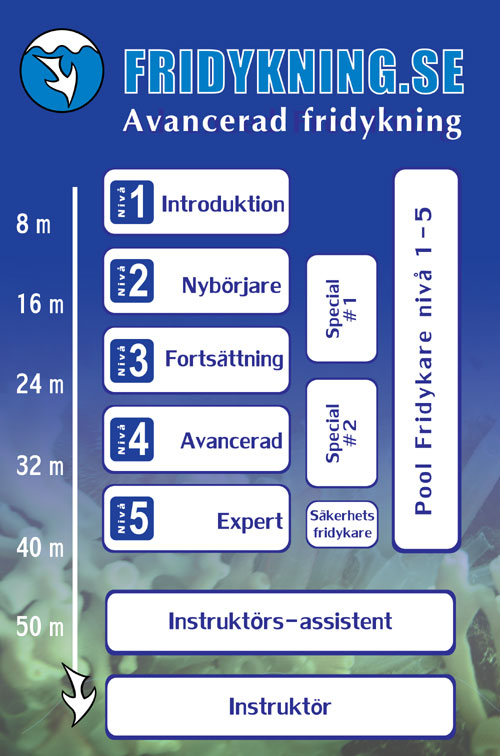
BEGINNER – LEVEL 2
Two days – 12 hours (No prerequisites whatsoever except that you can equalize your ears in a pool) Stretching based on yoga principles. Relaxation and oxygen-saving techniques, different breathing patterns before and after a freedive. “Hook breathing”. Maximum breath holds on land. Equalization techniques, duck diving, weighting, fin technique. Diving along a line, buddy system. SWBO, LMC and BTT theory and practice. Hydrodynamics. Modified breathing techniques from yoga. Rescue exercises. Theoretical test.
CONTINUATION – LEVEL 3
Two days – 12 hours Review from the beginner course. Summary of science around freediving. LMC and BO descriptions, as well as BTT technique. Yoga sessions. Preparation for advanced equalization techniques. Possibly Variable Weight dives to a maximum of 30 meters. Fine tuning of fin technique and hydrodynamics. Freefall. Breathing according to yoga principles. New equipment. Use of safety line, buddy system with rescue and BTT. Exercises where CO2 values are manipulated. Theoretical test. Diving from platform.
ADVANCED – LEVEL 4
2 days – 12 hours Latest findings within science around freediving. Proper yoga sessions, with breathing and relaxation and focus exercises. Advanced equalization techniques (frenzel and BTV (including mouthfill)). Lung packing. Variable weight diving to a maximum of 40 meters. Equipment testing. Sports psychology: affirmations, NLP, visualizations. Theory around FRC dives. Practical negative dives as warm-up. Negative lung packing. Personal training schedules and discussion around diet. Deep buddy rescue. Deep stress tests. Focus on relaxation and style. Theoretical test.
At Hästekasen Farm in Bohuslän (adventure center, fantasy village, permaculture, farming, natural building). Theme: Self-sufficiency.
You can see it as an active weekend getaway, we can call it a course, or why not a practical workshop. We can say it’s about experiencing nature at a farm between the sea and the forest. It will likely be a cure—a small mental “detox.” You’ll participate in various practical farm tasks, get a taste of what old-fashioned agriculture and forestry might have been like. You’ll get soil on your hands and an understanding of what a cycle is. A practical study in ecology.
We’ll discuss nature’s place in today’s society, the future of cities in a scenario where cheap energy is running out, and where humans have irreversibly changed nature and diminished their own quality of life. We’ll talk about food quality after harvesting and cooking with produce from the farm. We’ll discuss self-sufficiency in the city and in the countryside. Do your children a favor—bring them along.
Location
90 km north of Gothenburg, accommodation on the farm.
Fee
1,800 SEK (includes food and lodging—bring your own bedding) Contact Participants: 8 + farm volunteers Food: Vegetarian
Theory and Possible Practical Activities Outdoors:
Foraging mushrooms
Composting & soil work (1 hour)
Cultivation school: Terra preta & biochar production (1 hour)
Sowing seeds (1 hour)
Shearing sheep (1 hour)
Slaughtering lamb
Wool handling (1 hour)
Felling trees & barking (1 hour)
Simple clay cube wall (2 hours)
Baking, fermenting vegetables (2 hours)
Carving a wooden ladle (1 hour)
Making torches and stearin candles (2 hours)
Making apple juice
Making herb salt
Introduction to permaculture
Bonfire
Baking in a clay oven
Drying fruit
Apple jam
Music jam
Blacksmithing
Advanced bread baking with ancient ecological grains
We adapt to the weather. We’ll make a bonfire, we’ll get lost in the forest. We’ll start the day with yoga-inspired exercises or a walk (before breakfast).
We’ll also have the opportunity to sell our own products, which will be presented on-site.
An activity that mixes childhood “cowboys and Indians” games with the feeling of a modern action movie. At Hästekasen, we play on larger areas, with fewer bullets. This makes it more about sneaking, more about the nature experience. On our fields, there are many (secret) paths and buildings to sneak along and hide in. We create several scenarios/missions for you to solve.
Clothes and equipment are included. Everything is waiting for you. The toy gun shoots 6mm airsoft pellets powered by compressed air or spring. The pellets are small and biodegradable. You wear safety goggles and also a face mask.
This is not an offensive game; players are not allowed to touch each other. It’s about being quieter, smarter, and faster than your opponent. It is also a great opportunity to show that cooperation and communication are better than being a lone wolf.
Scenarios
Defend a position Last person standing Find the agent Group vs. group
The “weapons” we have are
8 gas-powered pistols, with magazines holding 12 pellets each. Two magazines per pistol.
2 “sniper rifles” (spring-powered).
1 semi-automatic machine gun (one magazine with 50 pellets).
So, the number of pellets is limited compared to regular airsoft games. This is because we want fewer pellets in nature and aim to encourage more tactical and stealthy gameplay over larger areas.
At a farm, close to the sea, on the west coast of Sweden. 4 days Cost: 150€
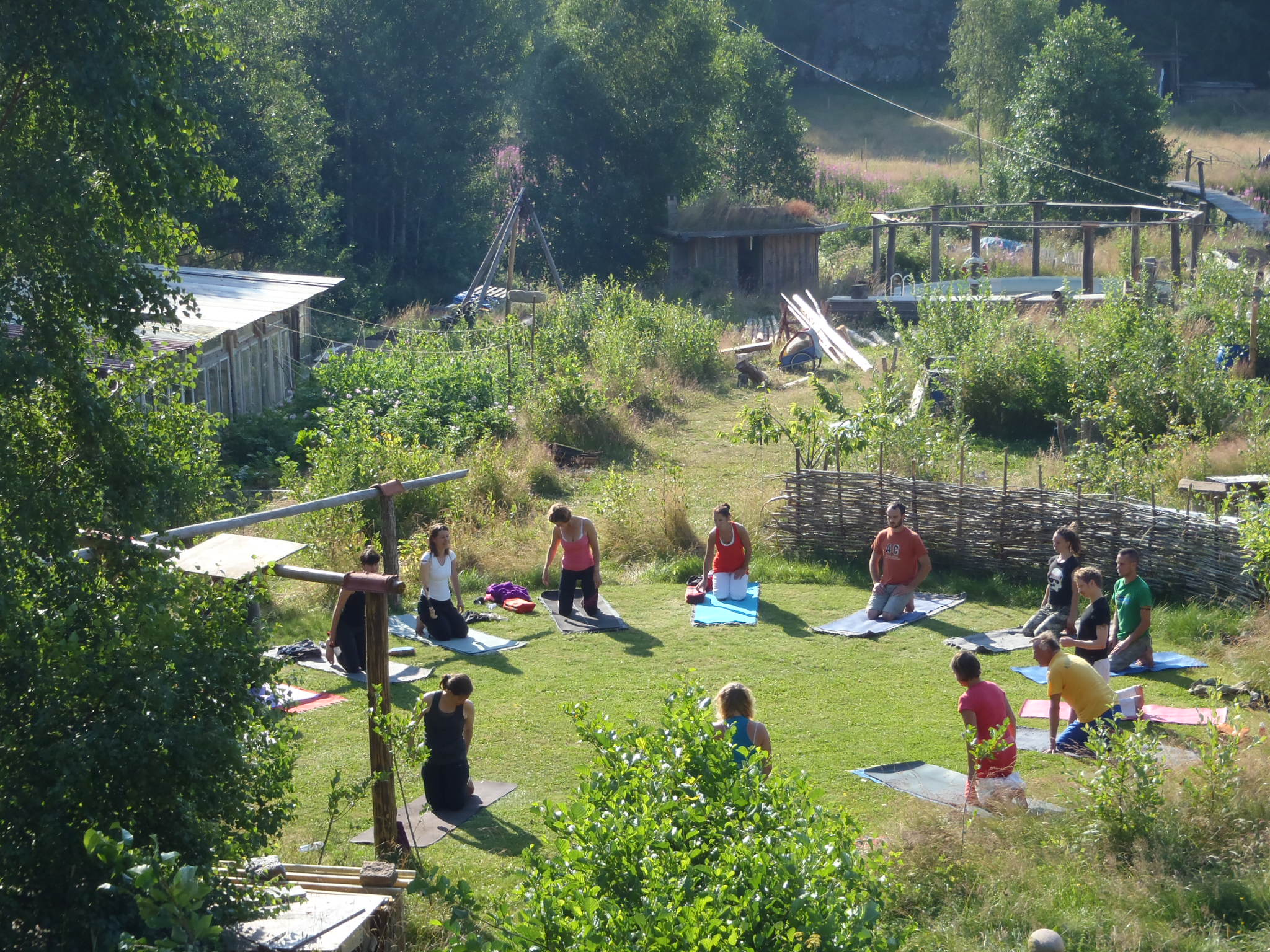
Yoga according to hatha tradition, with a mix of other methods relating to awareness, relaxation, focus (meditation). Forest, sea, Sauna, walks in nature, fires, drumming. Vegetarian food. Beginners welcome.
Yoga sessions every day at: 07.00, 12.00, 17.00 och 21.00
Bring soft stretchy clothes. Bring bed linnen. No TV, no radio, no books, no smoking. Keep your phone out of sight. Do not involve others in your possible coffee drinking.
We have certain sessions on the grass. Half a day in silence (Thursday).
Leader
Sebastian has been using yoga for 15 years with the aim of mastering elite freediving and mental peace and physical health. Speciality: Breathing- and concentration exercises.
Yoga is modern. Even trendy. It is also an ancient phenomenon. It has existed as a method for health and personal development for thousands of years. Yoga is not just about the physical exercises found within the tradition. The physical exercises, or Asanas, are one of eight steps in yoga.
The goal of these eight steps is to feel emotionally well. A feeling of peace and vitality. To feel well, both the body and the mind must be involved. To be able to process emotions, there must be a certain degree of thought control, or at least an “awareness” of what the thoughts and mind are doing. The mind as a description of what we can experience, and the thoughts as the way we process/respond to these experiences. Something that modern neuropsychology is now beginning to be able to explain. Sensory impressions that give rise to emotions that give rise to thoughts. And sometimes the opposite: thought patterns (habits in our thinking) that lead to emotions that shape our way of seeing the world. An expression of our personality: quirks, habits, behaviors.
Steps five and six deal with this: Pratayahara and Dharana. Awareness, thought control, concentration.
If you want to be able to take greater control over thoughts and emotions, a healthy and energetic body is required. To train awareness and concentration, the body and breath are excellent tools. Steps three and four: Asanas (physical exercises) and Pranayama (breathing exercises). The breath, the controlled breath, is a way into the mind, a way to work with thought control, to reach into the processes of the nervous system. A link between body and mind.
Steps one and two are described differently in different traditions. In some cases, they describe various cleansing processes (e.g., colon cleansing), in others, different ways of relating to other people. Questions of honesty and responsibility. A clear conscience and fewer conflicts with fellow human beings make it easier to develop in the “higher” steps.
Steps seven and eight deal with meditation and the goal of meditation (peace). Training in the lower steps makes these final steps less difficult.
Now there are a multitude of different styles within yoga, many modern ones that only aim at the physical result: flexibility and body control (often there are some meditative elements, which mostly serve as relaxation exercises).
In my opinion, it doesn’t matter so much which yoga you try, as long as you do it with presence and awareness of your body, your emotions, and your thoughts. That you take the time to “do” and “feel”. Some styles are more physically demanding, others more calm.
As a beginner, you don’t need to worry about whether you can do it or not. Just trying to do different Asanas will give you something. Over time, quite a lot. Maybe it will change your life. Your way of thinking and feeling and your entire worldview.
But for that, a lot of commitment is required, you will probably have to sacrifice some of the content in your current life.
Are you motivated for that?
A yoga retreat where we start with basic yoga exercises. Simply yoga for beginners according to ancient and fundamental Hatha yoga. A course at Hästekasen that operates according to the “open farms” principle. We serve vegetarian food, so vegetarians are more than welcome. At the same time, it is also a yoga camp where we mix styles and adapt the sessions according to the weather and the group’s mood. Sometimes the focus is more on doing yoga together than on being instructed. We talk about meditation and have moments where we try to develop our concentration and relaxation using effective methods. It’s a lot about breathing, as one of the teachers specializes in this. A yoga journey to Bohuslän, simply put.
A “transition – permaculture – prepper” workshop-conference-happening. What if we are not able to do the transition into a sustainable 10 billion people planet? What if things go to the worse – fast. Are we prepared? Are you prepared? Financial crisis? Energy crisis? Major weather disruptions? Ecosystem failures? Food production failure? …or just an economy in long recession and a state not fully delivering security and welfare.
Worst case scenario – a workshop in “personal” crisis management
Analyzing the big picture. Thinking global, acting local. Finding solutions for the individual. Personal resilience and self sustainability – how can it be achieved in a quickly changing world. The conference has about 100 topics.
Dates
(we have done this 2015, 2017 and 2020)
Accommodation
On site / shared rooms (bring sleeping bag or bed linen). Mostly vegetarian food.
Location
At Hästekasen farm outside Uddevalla, Sweden west coast.
We expect 12-24 people. Bring walking boots and inside shoes. Alcohol allowed on the fullmoon – Party like it is the end of the world, night. At the tavern at Hästekasen.
8th Tuesday, preparatory day for beginners (+300skr) 9th Wednesday, Travel day. Harvest and food preparation. 10th Thursday, Day 1: Threats to society. 11th Friday, Day: 2: Can renewables save our high tech society? 12th Saturday, Day 3: Study visit at Hastekasen eco-community. Harvest and conservation. Community building. FULLMOON party 13th Sunday, Day four; Evaluation and planning our personal future. 14th Monday, core team evaluation
Can we replace all that fossile energy with renewable energy?
What are you afraid of?
We often talk about avoiding crisis, but we also need to talk about dealing with crisis. Adapting to a fast changing world – a plan based on reality – not wishful hopes of utopian solutions. We can not wait and see what actions politicians will take, or expectations on a fast scientific quick fix.
What are the threats to your quality of life?
Before looking at solutions we must acknowledge the true risks and possible worst case scenarios. We will avoid wishful thinking. Optimism can not change everything – What if the authorities fail to protect the citizens, what if the environmental transition movement fails to change society in a controlled way. We will assume that bad things could happen and look for ways to cope with different scenarios. Examining how local networks could support each other. This is active citizenship.
This workshop is personal – we are not here to save the world – we want to examine possible crisis situations from an individual level. Your level.
We form a group, because that is how the human race has thrived – by cooperation. A group is the most efficient way to achieve things. Apart from being active in the democratic society and supporting transition, we will talk about our personal situations and discuss possible preparatory actions aiming decades into the future.
What potential crisis are there ahead in 10-30 years? Climate change, energy/fuel crisis, huge migration, ecological collapse, nature disasters, economy collapse, chemical toxins, fascist nationalistic governments, war, epidemics, increased out of control criminality?
Venue: Hästekasen Farm Four days of: – Deep discussions – Workshops – Lectures.
1) We will start with asking ourselves: what is the nature of the “good life”. What are we aiming for? 2) What possible obstacles are in our way to reach that or maintain the”good life”. We will move on an share our fears about the future. Each and every one will be given the opportunity to express their feelings about their own personal emotional situation. Each participant must prepare a presentation or a small lecture of 5-10 minutes, picking a topic from the prepared list. This is a “lean-forward” event, you must talk/contribute.
No recording (video or sound) – we, the group, must feel that this is OUR meeting. No mobiles inside the meeting rooms.
METHOD OF MEETINGS
Sessions of 60 minutes, including mini breaks of 60 seconds (open windows/stand up). – Mini lectures. – Mostly sociocracy (circle discussion) with facilitator. – No more than 12 people in each discussion/workshop. Roles: Off topic controller, Word divider, Summarizer – Always one person summarizing the discussion. Notes saved on a wall. – “Speech round” means everybody share 60 seconds of their opinion/comment about what we are talking about right at the moment. In big group meetings you only get 30 seconds. – No mobiles inside the room where we meet. There will be a box for mobiles.
SCHEDULE
PREPARATORY DAY
8th September, Tuesday 11.00 Introduction to “Collapsology” for beginners. Blue room. History of civilization and human evolution. How did we get “here”, what happened during the industrial fossile fuel era. What is energy doing for us? Films.
Evening activity
17.00 free time 18.00 Cooking together 19.00 Dinner 20.00 Fire and music and social game. In the fire dungeon. Make sure you get your sleep
DAY 0
– travel day 9th September, Wednesday 10.00 Harvest and food preparation. Slaughter of a sheep (we will discuss issues regarding humans and meat during the meeting). 14.00 Lunch in the tavern 16.00 Moving to the hostel/workshop area. 19.00 Dormitory and unpack. Write your interests on the schedule on the wall so we see which is most interesting for you. 20.00 Welcome and short name-presentation-game 20.30 Common dinner Get your sleep
DAY 1 – 10th September, Thursday
8.00 Breakfast 9.00 START (Swedish culture = be on time = be there before 9.00).
1a) Presentation round. Who is here? Name-games and presentation-games.
1b) Express your fears and hopes of the coming workshop days (“post it” presentation). What do you expect.
10.00 2) Start with a mini lecture about about LEARNING. – How does learning work, how can it be done effective. Skill, knowledge, attitude (what is the difference). What areas of knowledge (competences) will be touched? – Personal note book.
10.30 3) At the start, plan the final evaluation and summary: – Summary board (a 6m2 wall specifically designed for this). – Personal notebook (optional). – Photos – Film (filming also the notebooks and summary board). – Interview with participants (optional). – Questionnaire and votes on selected issues.
3b) Selecting a summarizer (or two), board writers. 3c) Selecting: Off topic guard, word divider (facilitators has already been choosen).
11.00 5) PERSONAL THOUGHTS – Discussion/sharing (split groups into 6-12 participants with one summarizer). 5a) What is “a good life?” What is your envisioned “good life”. What do you need? What do you want? Discussion followed by a personal list presented on the summary board.
5c) PERSONAL THOUGHTS – Discussion/sharing (split groups into 6-12 participants with one summarizer). What are your concerns/worries about the future. Threats to Your Quality of Life. Discussion followed by a personal list presented on the summary board.
12.00 5b) MASLOWS PYRAMID of needs, mini lecture and discussion BIG group.
6) THE PUBLIC NARRATIVE ON SOCIETY DEVELOPMENT: Media, School, Authorities, Business, Popular Culture – Does their story match with your sense of what’s happening? Are you in a filterbubble? BIG group meeting. End with a “speech round”.
13.00 Lunch
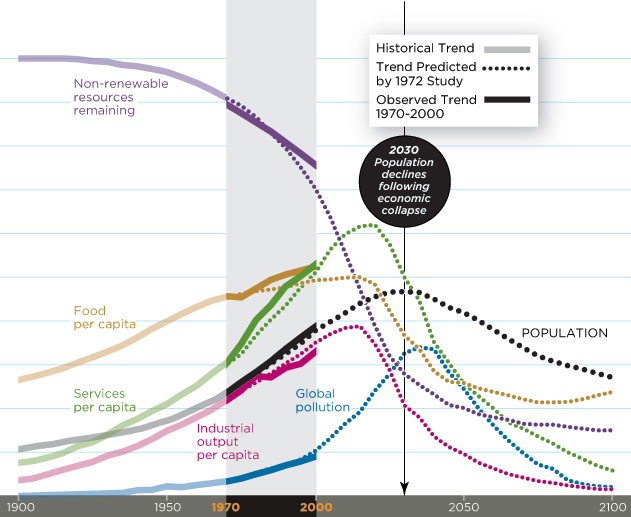
14.00 MAIN TOPICS – THE POTENTIAL PROBLEMS 1:0 IDENTIFYING MAIN PROBLEMS & FUTURE POSSIBLE WORST CASE SCENARIOS. BIG group. Short introduction lecture of “collapsology”. -> The “charts” what are they telling us? Overview: Energy, ecology, economy and population. Reminder -> What does collapsology mean. What is the definition of a collapse? (we exclude threats that are unlikely or far in the future, like; meteors, AI threats, Ice age, huge vulcano eruption, “6 degrees”) -> The importance of energy. 1:0:1 End with a “speech round”. 30 seconds each.
1:1 POPULATION predictions and growing needs/wants of the third world, a quick overview/reminder. BIG group. 1:1:1 End with a “speech round”. 30 seconds each.
15.00 1:2 CLIMATE CHANGE General weather patterns (nature catastrophes), flooding and wildfires affecting food production and livable areas. Affecting ecology and our human biotop in the near future within 30 years. Reminder “Panel discussion” + questions : Fast or slow changes? What are the current probabilities of “feedback loops“?
16.00 1:3 ECONOMY Economy´s relation to debt and cheap/easy energy. Reminder. 1:3:1 Split into smaller 6-12 person discussion groups. Discussion group 1: what are the risks of: 1) Big crash/recession lasting longer, severely affecting state function. or 2) Smaller recession, coming slower, lasting longer (generations?) dismantling society, causing inequalities, criminalities, revolts, anti-democracy.
Discussion group 2 1) How will citizens react to “less resources”. What can the transition movement do?
Discussion group 3 2) How will the state react to “less resources”. How will democracy react to less resources? 3) How will resources be divided in society, and between regions. What if only parts of society/regions collapse and safe havens are created?
Discussion group 4 1) Fossile fuels role in lifting people out of poverty and longer healthier more included life. Can we deny the third world easy cheap energy from fossile fuels. Can we?
17.00 1:4 ECONOMY summary BIG group. Short speech round
18.00 (optional extra hour) 2:0FOUR TOPICS OF DISCUSSION, split into four groups.
2:1 Group 1 TECHNOLOGY – Electricity, internet, cars, electric machines, fossil engines. How dependent are we/you? What do they cost in energy, material resources and time and competence? What would it “cost” to replace them all into a renewable circular economy?
2:2 Group 2 THE CITY – RESOURCES / INFRASTRUCTURE – POSSIBLE? What is the size of the cities’ resource acquisition area? What will be the first / biggest deficiencies in a crisis?
2:3 Group 3 MACROPOLITICS – conflicts regarding ENERGY / ECONOMY War, criminality, violence
2:4 Group 4 A STATE IN CRISIS – HISTORICAL EXAMPLES. – When a state fails – how does it happen. Early history or modern times: Kongo, Lebanon, Jugoslavia, Ukraina… – How do we handle crises? Historically. – How does democracy fail.
Evening activity, (may be delayed up to one hour and the free time may be used for optional continuing talking). 18.00 free time or extra optional program 19.00 Cooking together or extra small group meeting. 20.00 Dinner 21.00 Fire and music and social game, at Hästekasen (5 min walk through the forest) Make sure you get your sleep!
DAY 2 – 11th Sept Friday
8.00 Breakfast
9.00 2:5 SUMMARY of Day 1 Possible collapse / de-growth, time perspective Four scenarios: (+environment +energy) (+environment -energy) (+energy -environment) (-energy -environment)
10.00 2:6 ENERGY – BIG group What happens if we burn more Fossile fuel? Reminder Update on the situation of renewables.
11.00 2:7 Discussion, panel discussion with Q&A -> Can we replace fossile fuels with renewables? -> Nuclear power, what can it do for us?
13.00 Lunch
14.00 POSSIBLE SOLUTIONS – PERSONAL STRATEGIES
3:0 RESILIENCE – DEFINITION – mini lecture
14.30 & 15.00 3:1 PERSONAL Big group introduction. Split into groups (6-12 persons) and discuss (We will do this twice, so you can attend two groups). You can also form your own group and stick to one topic for the full hour: 3:1:1 Discussion group 1 PERSONAL ECONOMY – Describe and discuss you personal situation: employment / loans / resources / social network 3:1:2 Discussion group 2 PERSONAL HEALTH – pro active health solutions 3:1:3 Discussion group 3 CONSUMER – PRODUCER – Your needs vs resources. food, shelter, technology. 3:1:4 Discussion group 4 PERSONAL SKILLS – What competences do you have. Generalist / specialist. What are you looking for? 3:1:5 Discussion group 5 Barter economy? Alternative economies. CSA e t c 3:1:6 Discussion group 6 RESIDENCE, GEOGRAPHICAL Locations Local/regional situations. Are you movable/unmovable.
16.00 3:3 ECOLOGY SYSTEM THREATS – fast overview reminder. 3:3:1) Air 3:3:2) Water (drinking/farming) 3:3:2b) Oceans 3:3:3) Soil 3:3:4) Extinction of animals 3:3:5) Lack of antibiotics 3:3:6) Dangerous chemicals in the ecosystems and in species. 3:3:7) Lack of material resources for technical society
Discussion (one group for each topic) Which one is the biggest problem/threat (vote with your feet). Present the problem for the BIG group 17.00 (5 minutes each) and include possible “solutions”.
17.00 3:4 BIG group summary and speech round. Vote on what is perceived the most pressing problem?
Evening activity 18.00 Free time or Cooking together or extra small group meeting 19.00 Dinner 20.00 Fire and music and social game. Hästekasen farm, fire dungeon. 21.00 Party. FULLMOON (Party like it is the end of the world 😉 At the tavern at Hästekasen. There will be a bar. All fighting must take place in the gladiator pit.
DAY 3 – 12th September Saturday
Free half day rest for walks in nature or… 11.00 5:0 Harvest and conservation work. Hästekasen Farm. 11.00 5:1 Study visit at Hastekasen farm. How has Hastekasen “solved”: Water, sewage, shelter, warmth, food, storage of food. Clay and timber houses, dams and soil management.
Afternoon schedule: 14.00 lunch, at the tavern at Hästekasen.
15.00 6:0 THREE DISCUSSIONS, choose: Discussion group 1 6:1Migration. Discussion group 2 6:2 MEDICAL CARE with/without hospitals. How? Discussion group 3 6:3 Violence and criminality in a state without fully functioning law enforcement. Attitudes to violence / defense.
16.00 7:0 Community building Discussion in small groups: In your network, your tribe, among your neighbors…what values and rules do you want to see while living in a deep recession, or partly collapsed society. How much cultural diversity. Attitude towards food. Attitude to weakness/ individual needs/wants. To violence. How will decisions be taken…
17.00 7:1 Big group meeting. Summary of 7:0 How do we feel today?
Evening activity 18.00 Cooking together or free time 19.00 Dinner 20.00 Fire and music and social game. At Hästekasen, fire dungeon. Get your sleep
DAY 4 – 13th September, Sunday
8.00 Breakfast 9.00 Start 8:0 POSSIBLE SOLUTIONS – your network Where do you live or want to live? 8:1 The countryside/homestead/ecovillage. Location, soil quality, weather, region. 8:2 The homestead: Animals role in winter regions agriculture. 8:3 House building, Tiny house? water, sewage. 8:4 The homestead: energy 8:5 The homestead – property owning – Sweden Rules. Partition, Building, Ownership.
8:6 The nomad: Are you prepared to move around. Migrate? Wagon house? Squatting?
8:7 URBAN solutions – Transition work – Collapse survival in a city
8:8 Small town solutions
9.45 Repeat the groups above
10.30 9:0 EMPOWERMENT 9:1 Discussion group 1-2 How do you stay inspired and active and meaningful and involved while preparing for a possible “harder” future. 9:2 Discussion group 3-4 How is the state a co-player in the creation of a resilient society? How can we use the state and the European union to create resilience?
11.00 9:3 SUMMARY – BIG group 9:3:1 What if we are wrong? What if we can transition. What if we find energy enough? 9:3:2) Speech round
12.00. 10:0 PERSONAL STRATEGIES. Your new to-DO list write it in 20 minutes, present it to the small group . Group feedback. Let your plan involve: Networking, Competence development, Resource plan, Location, Plan B, Plan C. Seven groups: 10:1 The homesteaders 10:2 The ecovillagers 10:3 The urban warriors 10:4 The small towners/villa suburbs 10:5 The nomads 10:6 The migrators 10:7 The confused. 10:8 Your owngroup.
13.00 11:0 Whats next? Big group. One hour discussion. (Walking lunch)
14.00 11:1 Last speech round, maximum one hour.
THE EVENT FINISHES AT 15.00 AND THE REST OF YOUR LIFE BEGINS
Monday 14th September, 11.00 Evaluation core team, Blue room
OBJECTIVE of the project
– Empower – Inspire to thoughts and action – Spread competences – Create networks – Ideas for future more specialized workshops
Is it possible to predict anything in a very complex situation with many interlinked factors?
HOMEWORK before workshops
Prepare a 5-10 minute presentation on any of the topics below that you are strongly interested in or have personal experience with. Use sketches, pictures, drawings, graphics, text with a text size of at least 7 cm (put on the wall).
Choose subject /topic / question
1) How can you live a life, using less energy? 2) How can you live a life burning less fossile fuel? 3) How can YOU increase the quality of food production? 4) How can we produce more food? 5) What competences will be needed in a future low energy society? 6) What competences will be needed in a future possible high tech automated society? 7) Which machines do not you want to do without? Rank. 8) What do you think is the biggest threat to your health in the future? 9) In what way can animals be used to survive in a low energy society? 10) How could you survive in Scandinavia (cold winter countries) if there was no import of food? How is money created? How does the banksystem work? Why is oil paid in dollars. An analysis of how the interest rate will develop. How is GDP calculated? Describe an alternative GDP tool. Describe the logistics and content of food production. How long will today’s oil, coal, gas, uranium last? How long will the current oil be enough / used. How many % of things can be recycled on a large scale. How do you stay inspired and active and meaningful and involved. How can you live without money. Describe the civil war in Ukraine or in Yugoslavia (ground level). How do you slaughter and chop an animal (different ways). Describe how great powers / empires collapse. Describe how to build a 12V system with solar cell / wind power Describe a utopia of a future 1-million city. Make a psychologic description of a western society citizen. Anything about medical care without a hospital. Anything about medicinal plants. Describe how a CSA agreement / organization could look. Describe cultivation zones and what to grow there. Anything about cultivation. Anything about food. Describe soil quality. Describe a wagon that you can live in. Describe what is required to get building permits for a year-round house. Anything about crime and protection against it. Describe demographics of city, rural, urban area. Propose a regulatory framework for a collective sharing household. What is your limit for immigration to your country and why?
QUESTIONS
In what areas do you think there are rapid / radical collapses / changes (in 5-7 years)? – Economy – Ecology – Energy – Immigration
What changes do you think will happen in the following areas: – Resource allocation – Poverty – Transport options – Food quality – Environmental quality – Climate policy. – Power supply – Drinking water – Drainage – Unemployment – Diseases / epidemics – Government regulation / control – Supranational agreements – Immigration – Emigration – Population – Urbanization – Crime – Nationalism – War / Peace – Import / Trade – Democracy / Freedom – Technology – Free market.
Questions
– How are you getting hurt from a potential financial crash? – What are the basic skills / skills that society needs in a negative GNP (economic decline) or low energy future scenario? – What is your knowledge / skills in a future scenario? – Who will become unemployed in a growing society? – What do you think is the biggest future threat to your quality of life? – Where and how do you want to live in 20 years? – How much of your income is clean and healthy food worth? – How many kilos of food do you think you could produce in your spare time?
Films to watch before
http://vimeo.com/93878639
Short schedule
State of the fast changing world, nature and society
Put a star at the things that really interest you. Look forward to.
Put a heart at the things you really liked. Or a sad smiley, where you were disappointed.
– Introduction to “Collapsology” for beginners. – History of civilization and human evolution. – What happened during the industrial fossile fuel era. – Fire and music and social game. In the fire dungeon. – Harvest and food preparation. – Slaughter of a sheep. – Lunch in the tavern. – Write your interests on the schedule – Welcome and short name-presentation-game – Express your fears and hopes of the coming workshop. – Mini lecture about about LEARNING. – Plan the final evaluation and summary. – Documentation – Summarizers/board writers – Off topic guard – Facilitators – What is “a good life?” Personal list on the summary board. – What are your concerns/worries about the future. – Maslows pyramid of needs, mini lecture and discussion. – The public narrative on society progress. – Short introduction lecture of “collapsology”. The charts. – The importance of energy. – Population predictions and growing needs/wants of the third world. – Climate change, general impacts – Fast or slow changes? Probabilities of “feedback loops” – Economy´s relation to debt and cheap/easy energy. – Risks of Big crash/recession lasting longer. – Risk of Smaller recession, coming slower, lasting longer (generations?) – How will citizens react to “less resources”. – What can the transition movement do? – How will the state react to “less resources”. – How will democracy react to less resources? – How will resources be divided in society, and between regions. – What if only parts of society/regions collapse and safe havens are created? – Fossile fuels role in lifting people out of poverty and short lives. – Should we deny third world easy cheap energy fossile fuels. Can we? – Technology – How dependent are we/you? – What do technology cost: energy, material, time, competence? – Cost to replace all tech into a renewable circular economy? – What is the size of the cities’ resource acquisition area? – What will be the first / biggest deficiencies in a crisis? – Macropolitics – conflicts regarding energy/economy. – War, criminality, violence – A state in crisis, historical examples. – When a state fails – how does it happen. – How do we handle crises? Historically. – How does democracy fail. – Possible collapse / de-growth, time perspective. Four scenarios: – What happens if we burn more Fossile fuel? – Update on the situation of renewables. – Can we replace fossile fuels with renewables? – Nuclear power, what can it do for us? – Resilience, definition – mini lecture – Personal economy – employment / loans / resources / social network – Personal health – pro active health solutions – Consumer / producer – Your needs vs resources – Personal competences – What competences do you have. – Alternative economies, Barter economy, CSA e t c – Where to live – Locations – Local/regional situations. Are you movable/unmovable. – Migration theoretical workshop exercise. – Air – Water (drinking/farming) – Oceans – Soil – Extinction of animals – Lack of antibiotics – Dangerous chemicals in the ecosystems and in species. – Lack of material resources for technical solutions – FULLMOON (Party like it is the end of the world 😉 – Harvest and conservation work. Hästekasen Farm. – Study visit at Hastekasen farm. – How has Hastekasen “solved”: Water, sewage, shelter, warmth e t c – Migration. What are you willing to share. – Medical care – with/without hospitals. How? – Violence and criminality in a state without fully functioning law. – Community building – The homestead/ecovillage. Location, soil quality, weather, region. – The homestead: Animals role in winter regions agriculture. – House building, Tiny house? water, sewage. – The homestead: energy – The homestead – property owning – Sweden Rules. Partition, Building. – The nomad: Migrate? Wagon house? Squatting? – Urban solutions. Transition work – Collapse survival in a city – Small town solutions – How do you stay inspired and active and meaningful and involved – How is the state a co-player in the creation of a resilient society? – How can we use the state and the European union to create resilience – What if we are wrong? What if we can transition. – Personal strategies. Your new to-DO list
10:1 The homesteaders, countryside 10:2 The ecovillagers, countryside 10:3 The urban warriors 10:4 The small towners/villa suburbs 10:5 The nomads 10:6 The migrators 10:7 The confused. 10:8 Your own group.
How to be a good group member Be on time, if late, enter discreetly. If you are late don´t expect the moderator to repeat all information again for you. If you need to leave early, leave discreetly. Support the speaker/lecturer, engage and ask for clarifications if it is unclear. You can interrupt anyone if you want to say you agree or support. Just say agree, or yes, or ok, or hmm, or thats interesting, or ask for a clarification, like: Really? How do you mean? Stay on the topic! Comment or ask only questions that will benefit many in the group (keep your own unrelated personal ideas/details to smaller forums). Every time you adress the group, make sure you know what you want to say and why, say it as short and concise and clear as possible. Remember, you are not talking only to the speaker or lecturer, speak loudly to the whole group.
The future is not apocalyptic. However, it is a story of cultural decline, increasing poverty, worsening health, shorter lifespans, and abandoned population centers. In short, the rest of this century will feel like one long, intense 1930s-style crisis, and when it’s over, the world will look completely different!
But it won’t lead to the end of the Earth. Human culture is more fragile than the web of life. Our own destructive lifestyle will put a stop to our experiments before they can go too far!